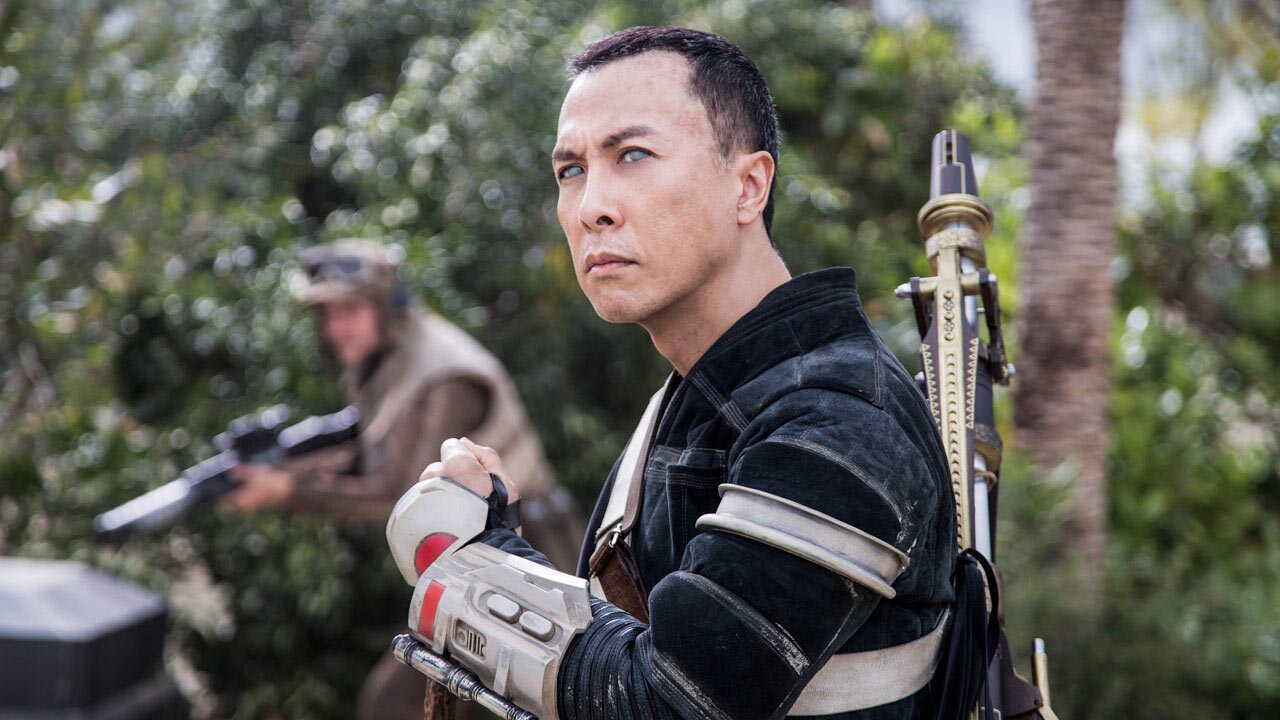
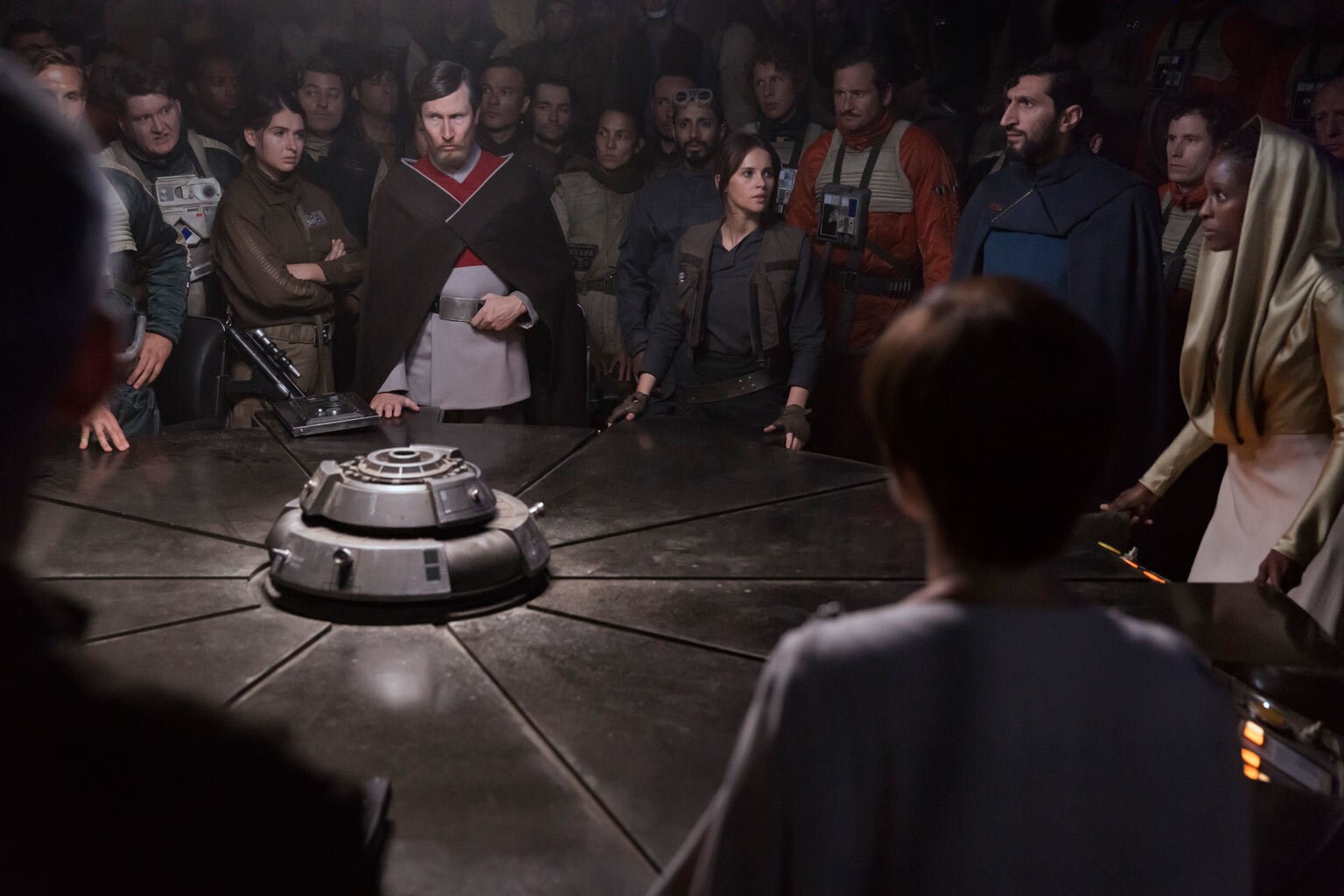
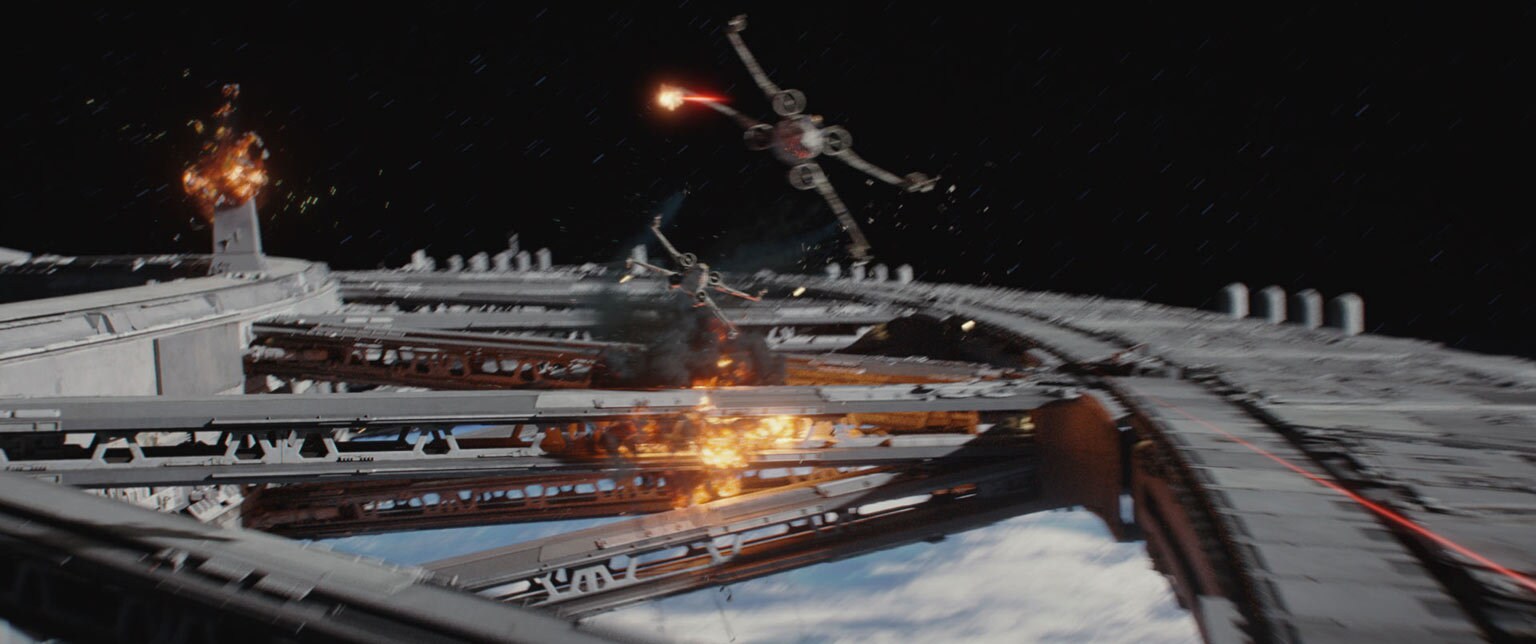
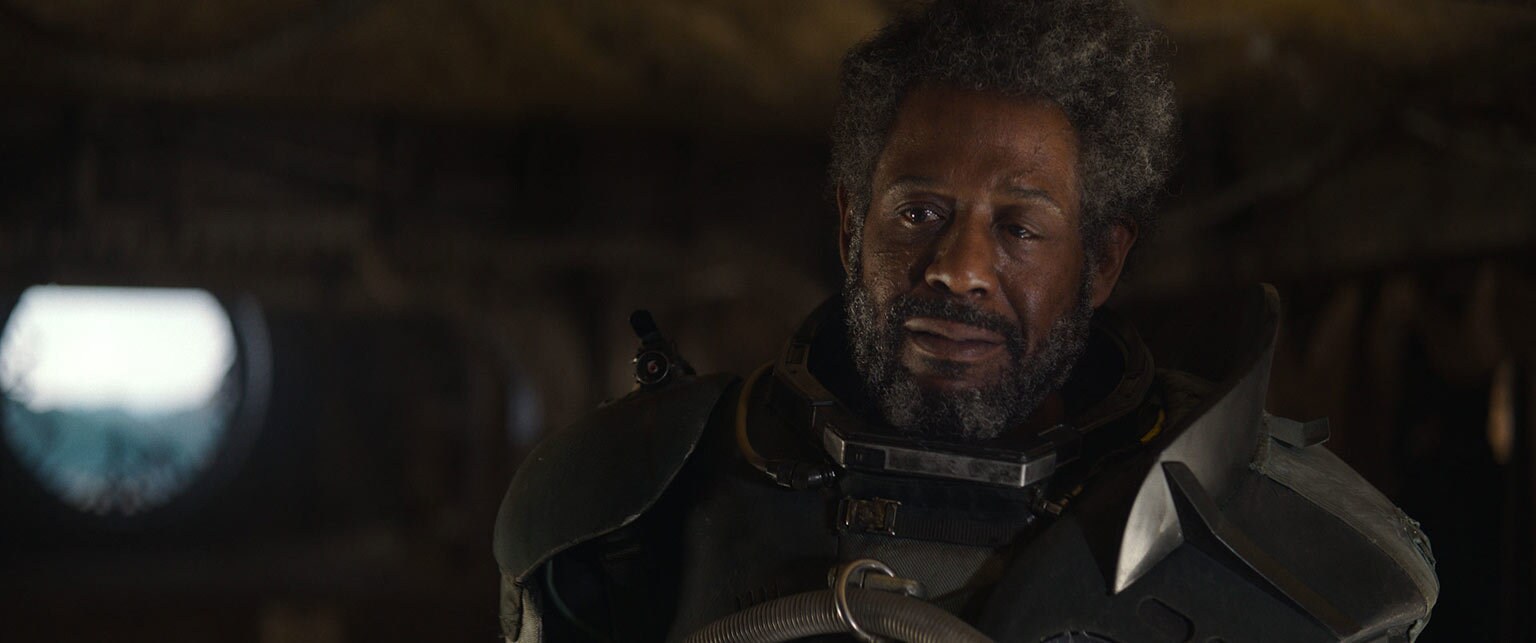
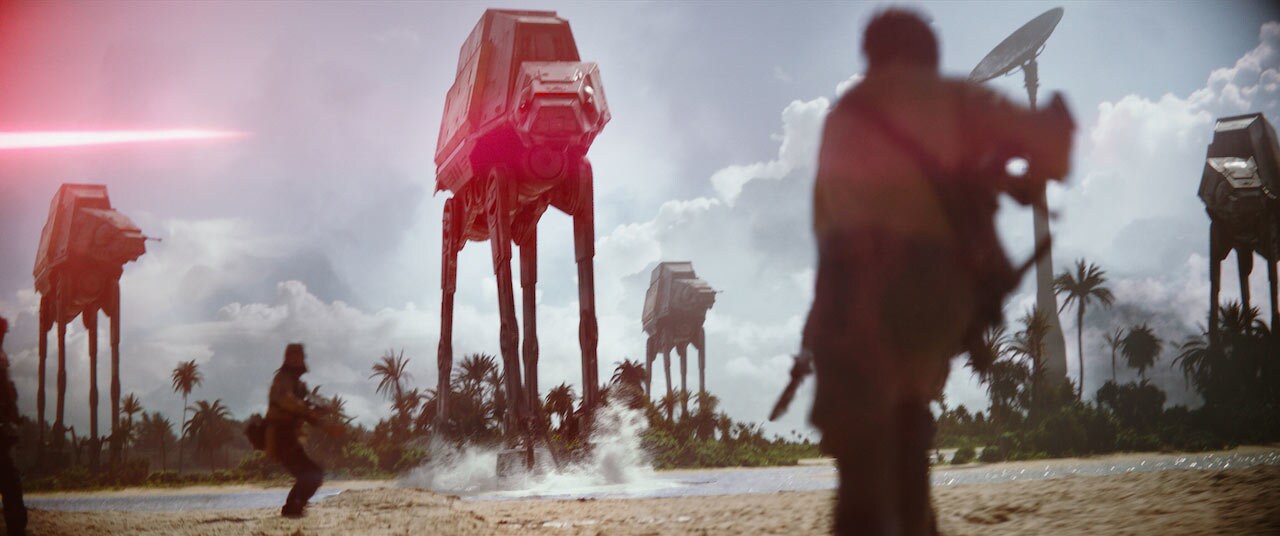
It's been a long time since my last film review, but this one is worth coming out of hibernation for. The reception for the latest installment of the Star Wars saga has been overwhelmingly positive, and the film will obviously have significant cultural reach, so like a cargo shuttle from a spacecraft of dubious intent it deserves a close inspection before being provided a docking bay in our homes and hearts.
THIS REVIEW MAY CONTAIN SPOILERS
The Good
The Worldview
There are plenty of good lessons to take away from this movie:
- It is good to have the courage to sacrifice ourselves for others and/or a cause greater than ourselves (and here the Christian worldview provides the only cause worth dying for; our heroes are dying for arbitrary values, but their courage is still commendable) - John 15:13
- Tyrannical regimes that centralize power in the name of peace are bad and should be resisted; liberty is good and should be defended - Neh. 4:14
- Family relationships are good and parents should take care of their children - 1 Tim. 5:8
- Trust has to be earned - Pr. 20:6
The Art
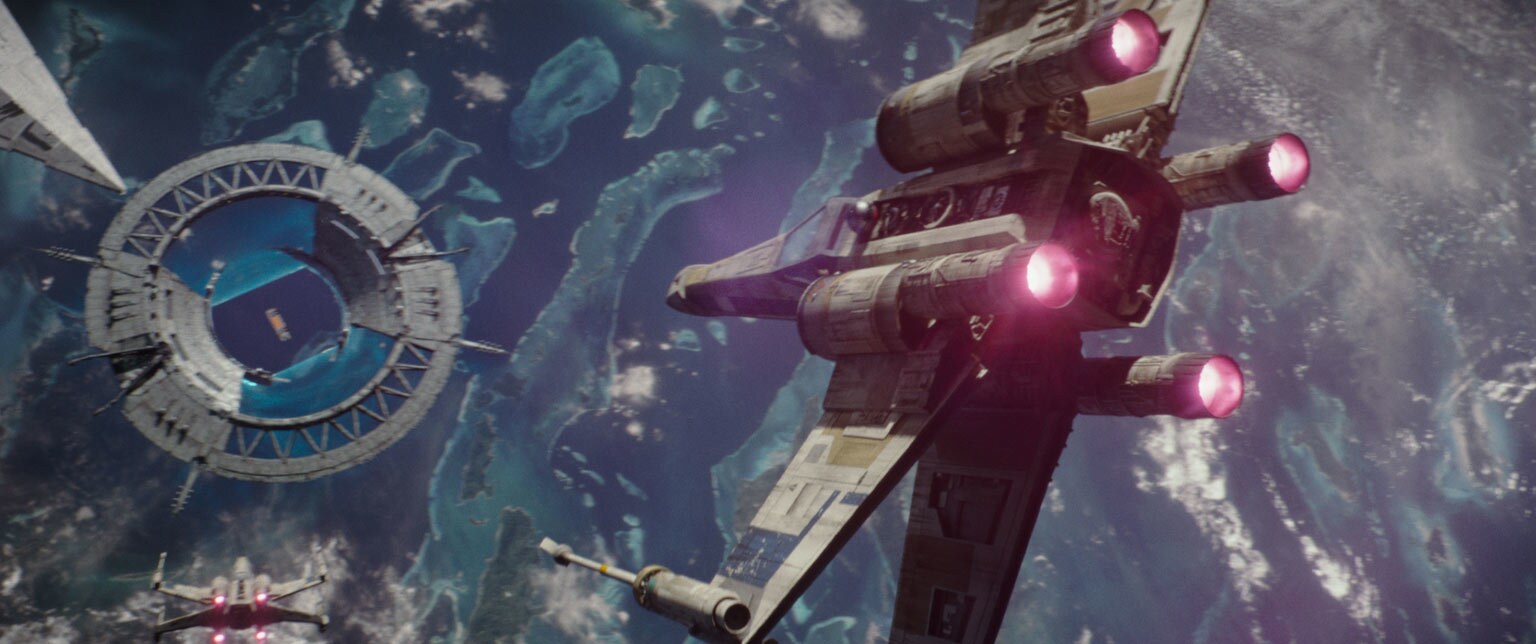
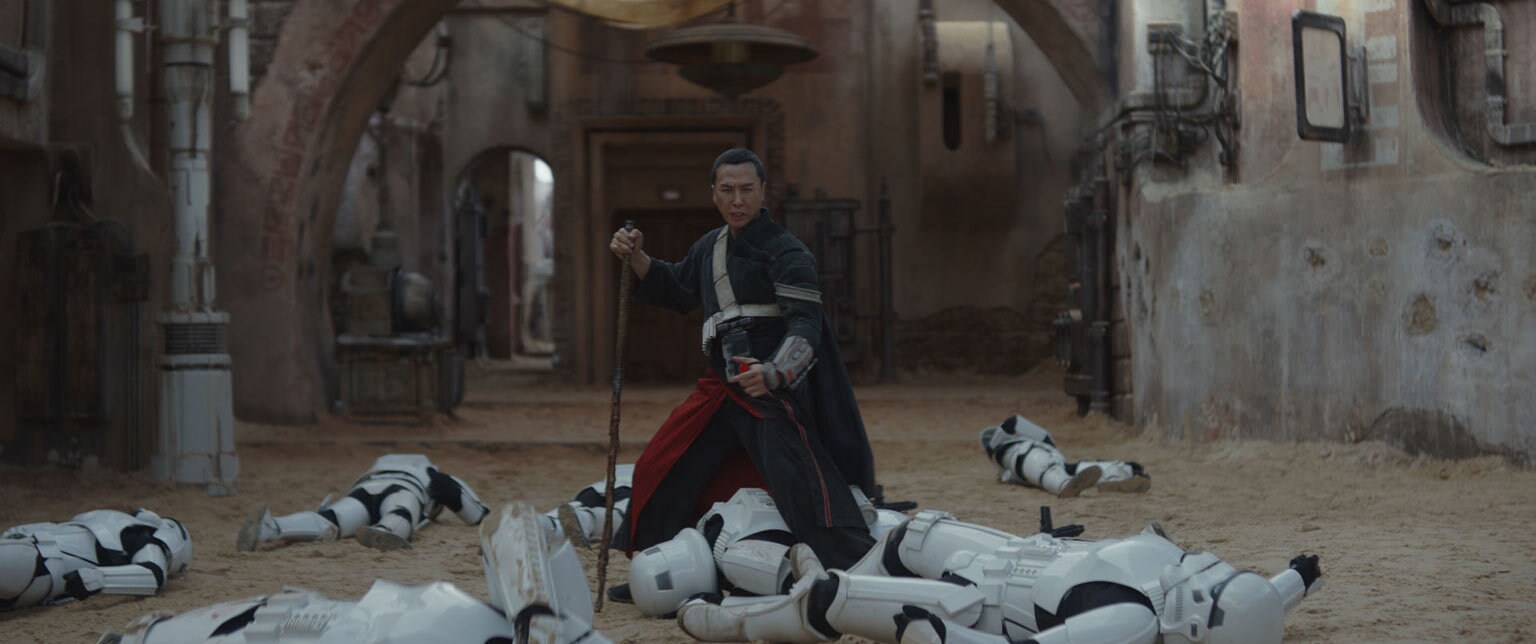
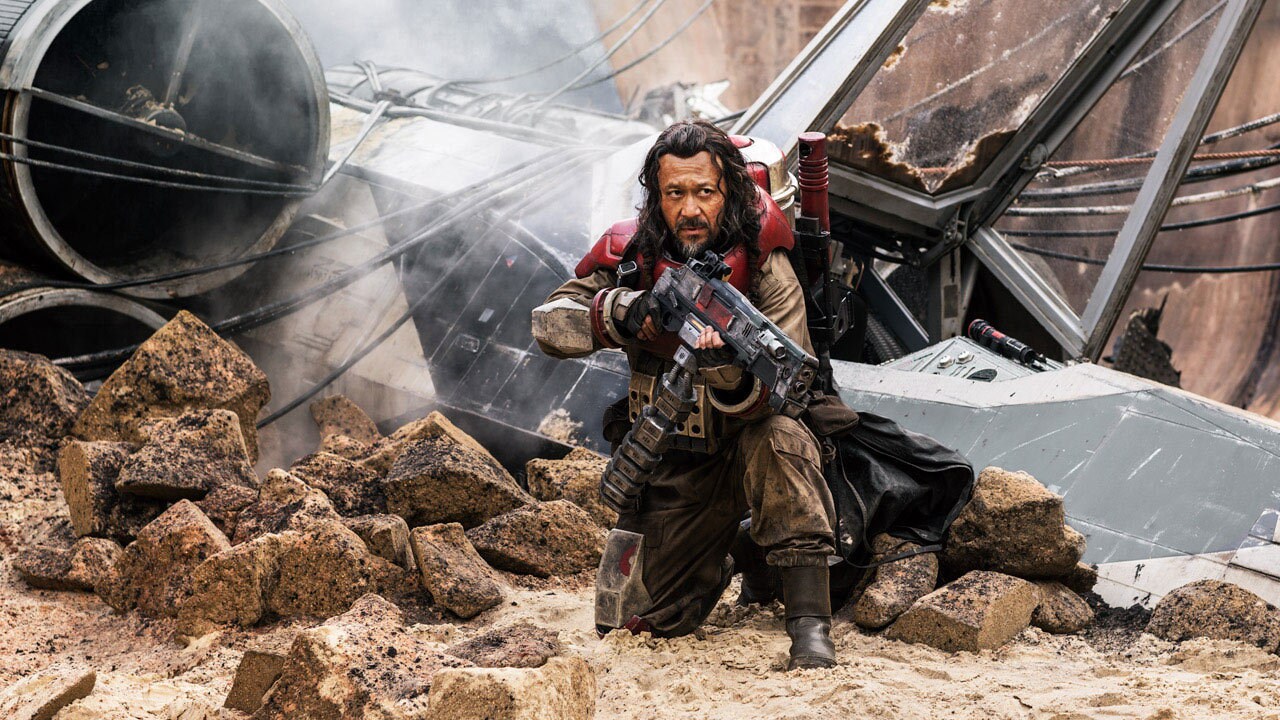
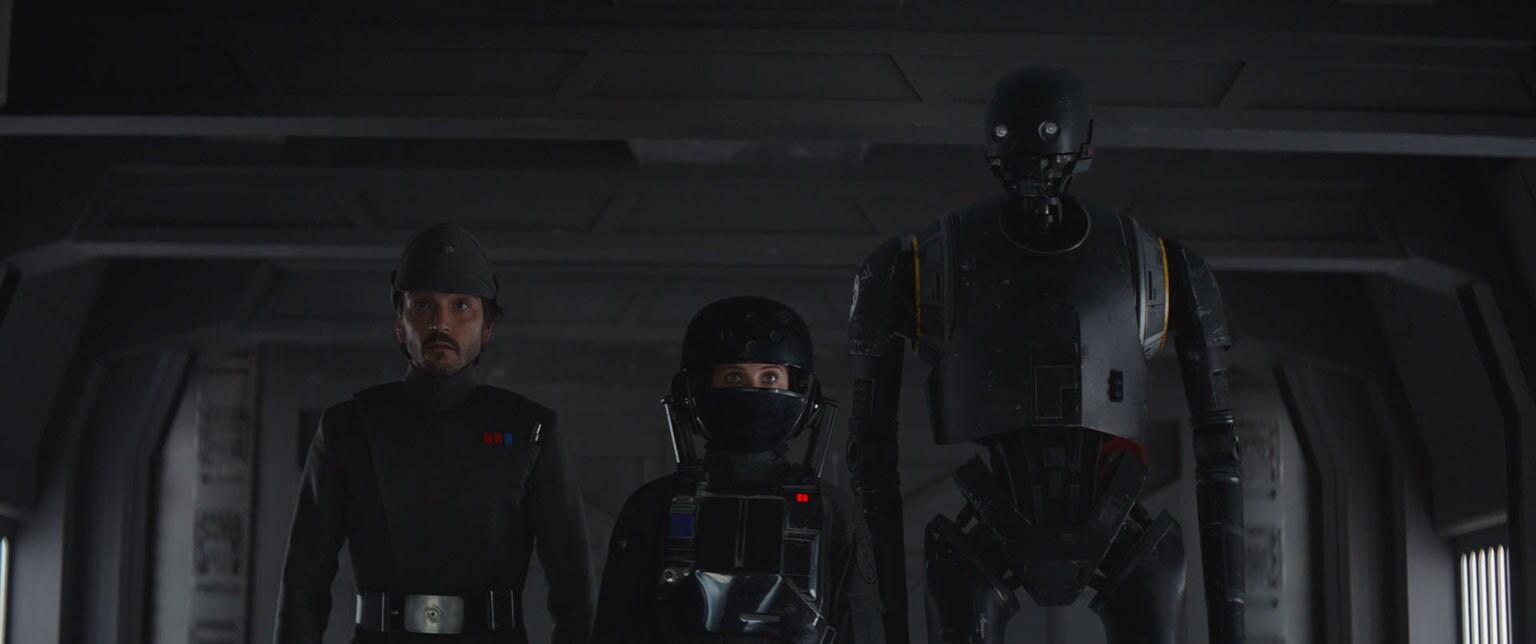
The art in this film was pretty much what you would expect from a modern Star Wars movie, with the exceptions we will note in the next section; incredible graphics, engaging sound design, solid acting.
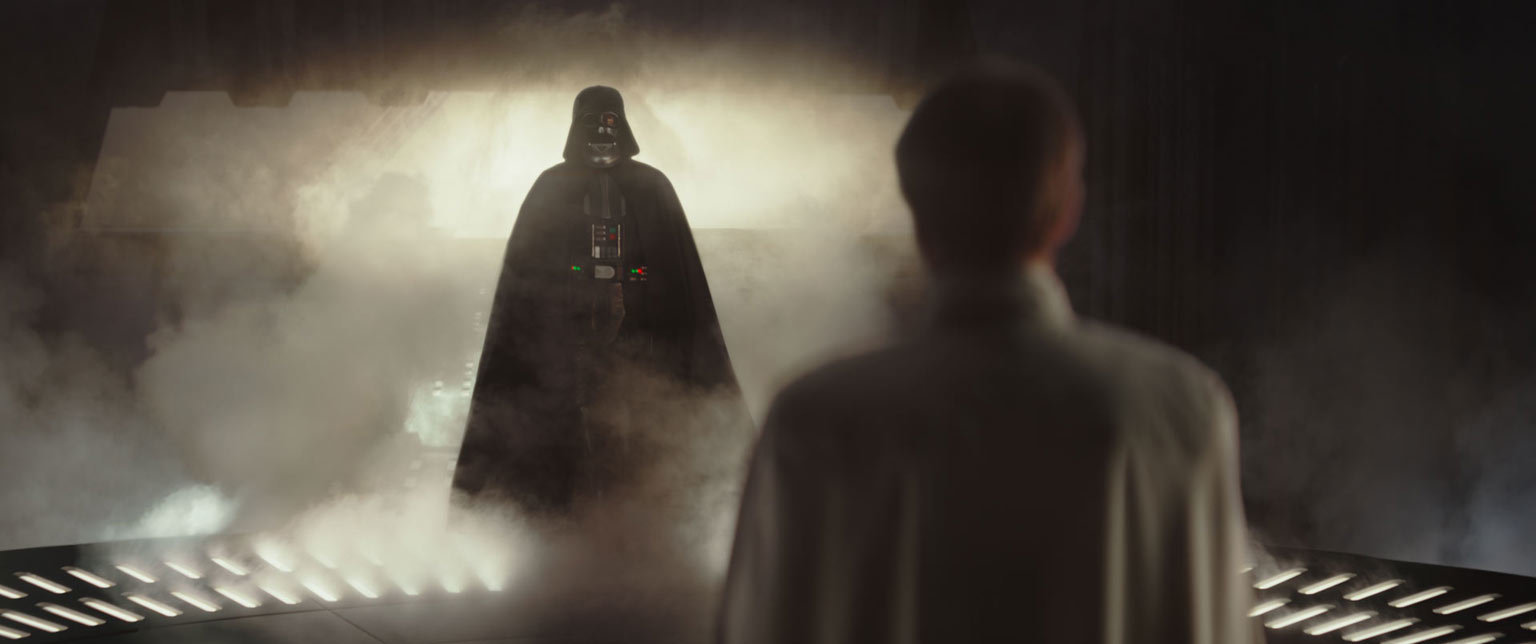
And really cool shots of Darth Vader.
I really appreciate the fact that they actually let people die. In particular, the deaths of the main characters at the end added a lot of weight to the importance of their quest and the depth of their resolve which is severely lacking in most modern movie fare.
The romance was tasteful and believable (although largely lacking the richness of gender distinction and attraction).
Also, the tie-in to the next film was masterful.
The Bad
The Worldview
As far as the battle of the worldviews is concerned, however, this film is overall fighting for the Dark Side. And I don't mean the Dark Side of the movie's universe; of course Vader and his ilk are still the bad guys; I mean the Dark Side of the real universe.
Rogue One is packed full of unBiblical messages that are easy to miss and easier to absorb. Whether such packing was intentional or not doesn't really matter- whether the droid meant to shoot you or not, the blaster hit hurts just the same.
- One of the most chilling messages of the film was a new one to this franchise. In the previous episodes of Star Wars, the good guys did good things. They wore white hats. They played by the rules. Any good guy who started fudging wound up Darth Vader.
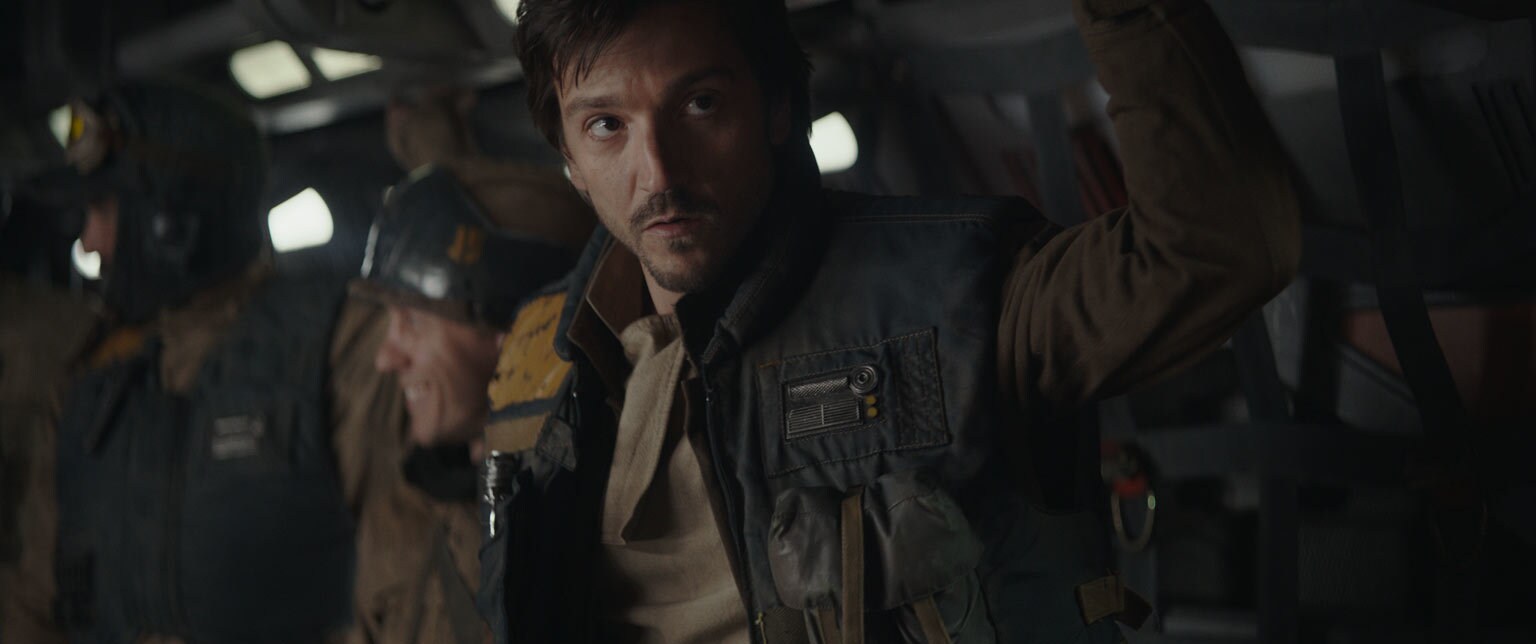
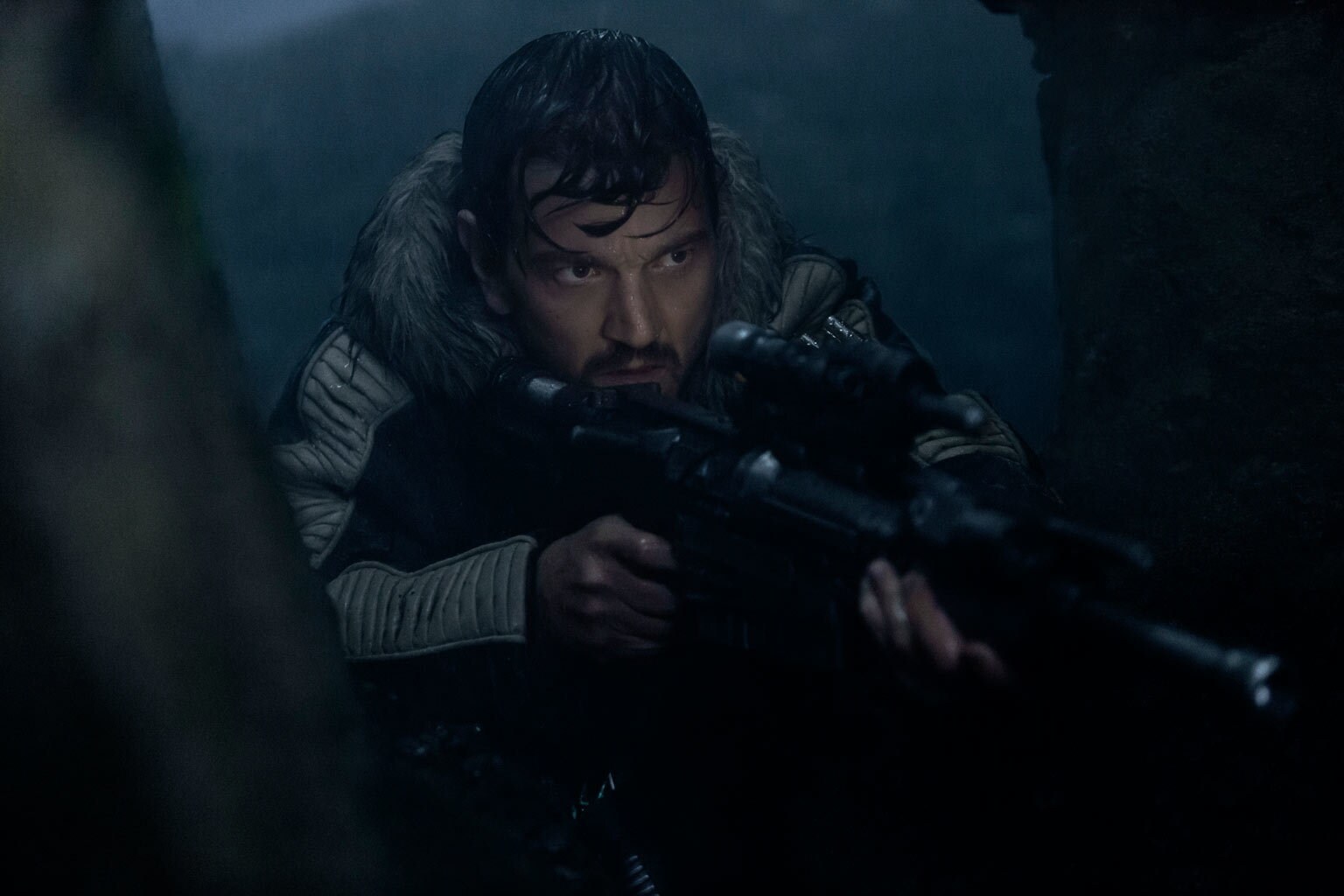
Rogue One presented a world of heroes driven by situational and relativistic ethics. Cassian, who by the end of the film is a hero, in the beginning of the film shoots a man in the back in cold blood and without any justification beyond convenience. Later, he shoots and kills a resistance fighter (who is ostensibly on his side) which leads to the death of other resistance fighters, to save Jyn from an accidental demise- we can debate the ethics of that choice, but the point is that the choice was presented in the first place, and he with no hesitation does what seems best to him. Later still, he, at the head of a group of other rebel fighters, mentions how they all basically feel guilty for doing immoral things for the sake of the rebellion. And these are the heroes... and they aren't repenting of the immoral things; they just feel bad about them.
You can have complex heroes and villains and still have a clear standard of right and wrong. God does. (Is. 5:20)
- Which brings us to point two; as with all films that will not acknowledge God or His Word, there is no standard for morality in this film. The good guys are good because they are... good at heart-ish... and care for other people... sometimes. Unless they are shooting them in the back for convenience's sake; then they feel guilty. Maybe. IDK.
Of course, that is better than the straight-up cold-blooded conscienceless city-destroying that the Empire represents... but we only know it is better because we all have God's Law written on our hearts. This film has begun watering down the distinction between the Dark Side and the Light Side... but that distinction has been arbitrary since Episode I. Or IV. Or whatever.
Humanism is coming home. The worldviews forged over the past century are finally making their way onto the silver screen. Our standards of morality are going rogue, and the galaxy will suffer for it.
- Which brings us to point three; redemption through good works. These guys are like Natasha Romanoff; they've got red in their ledger, and they are out to really strike a blow against the Empire to make up for the bad things they did so they can feel better about themselves. Even though they did the bad things for good reasons. Umwut?
This mode of salvation is directly opposed to salvation by repentance and faith in Jesus Christ- the only way we can be forgiven for our sins.
- Next, we have the good ol' mumbo jumbo about the Force. Let's not beat around the bush here- this stuff is blasphemy in pure form; evil and devilish and yet so innocent on its face. It attributes things which should only be said of God to an impersonal force copied blushlessly from eastern religions. This film only takes it further; "I am one with the force and the force is with me," chants a blind man who through the force is a super-warrior, and when he dies he counsels his friend to find the force- and thereby to find him as well. In other words, god is everything, everything is god, and when we die we will be absorbed into Brahma. The True God hates this kind of stuff, and so should we. We aren't God, and we never will be. He made it all, He owns it all, and He reigns over it all.
- Egalitarianism is such standard fare nowadays that it is easy to become accustomed to the flavor, and this requires us to be all the more vigilant in calibrating our taste buds.
Rogue One presents us with yet another action heroine in yet another world with no distinctions between men and women. Jyn Erso is a skilled warrioress whose ability to whoop up on bad dudes impresses Cassian more than her beauty or femininity. While we can all appreciate the lack of sexual innuendo that this androJyny presents, the problem is that there is also simply a lack of distinction as a whole. Men and women fight. Men and women lead nations. And Jyn is the galactic Katniss, put in a place that only she can fill, giving the pep talk to the troops, rallying the council, and throwing down a lot of bad guys along the way.
It's interesting watching a worldview progress; Leia was a previous generation feminist: beautiful and womanly, but with her moments of stubborn "I can do anything a man can do." We are beyond that now. Now we don't even talk about it. Nobody notices, nobody cares. None of the men open the doors for the ladies. They're empowered, you know. They can get their own door.
This message is made all the more powerful by the fact that the authors of the film put Jyn in a place where most of what she does really would be OK. Deborah might have given a pep talk to the troops. Plenty of women in Scripture held influential and powerful positions. And what daughter put in Jyn's position would do anything other than what she did, other than perhaps stay behind on a mission or two?
The issue is less about any specific action and more about a worldview that says "there are no distinctions between men and women; we will not submit to God's pattern for manhood and womanhood." Today we consider an empowered woman one who is free to be like a man; the Bible presents an empowered woman as one who is fully a woman. Men are supposed to be the leaders and the fighters. That is the way God designed it. But this movie, along with most today, reject that idea entirely. (Neh. 4:14, Is 3:12)
Now before you accuse me of wanting women to be helpless weaklings,
bear in mind that I've taken my wife through multiple
self-defense courses and we named our daughter after a woman who killed
an enemy king in his sleep with a tent peg.
So there's that.
The Art
- I am a big fan of sad movies; I am not one to complain about characters dying. But this film was strewn with one epic, dramatic death scene after another, and it was overkill. Pun intended. The characters were largely underdeveloped, and their deaths were largely unnecessary. The important deaths would have had increased gravitas if it weren't for all the red shirts also getting their own scene of demise.
"Hey guys, let's watch a random fighter pilot yell for help over the radio and then get vaporized!"
"Nope, I'm just gonna stand here and die instead of escaping with y'all. But thanks."
"The Force kept me safe as I walked to the switch, and I forgot about it on the way back, so whoops. But hey, believe in the Force and you'll still be with me."
"Now I believe in the Force so I'm gonna slowly walk forward in my rage over my friend's death while praying to the Force and kill like three people before dying awesomely because apparently the Force's magic powers broke."
- This one had less cliche content than
The Force Awakens (which was basically Ep. IV 2), but it still had its reincarnation of C-3PO/TARS/etc. (who was still my favorite character- his demise was actually the one part in the movie that choked me up). Oh, and another orphan girl. Nobody in this universe has living parents except for Luke.
- I did not care. The film gave me no reason to. When we first meet the main guy, he murders someone in cold blood; meanwhile the main girl is kinda accidentally on a quest for her dad so she can be freed from people who kidnapped her from her previous kidnappers... meanwhile, everybody else dies. Honestly, the last ending climax of the movie was the only part of the film that really drew me in.
- I was also disappointed in the musical avoidance of the full versions of John Williams' themes. Giacchino is a master, so I am not sure where the blame lies for a score that, at least to me, was lackluster compared to its heritage.
- The violence was darker and more gruesome than the previous films, and it was completely unnecessary; it seemed to correlate with the more morally ambiguous worldview of the film.
On Competing Affections
One other note- and this is true of every film, not just
Rogue One- a man at our church likes to emphasize the importance of making sure that nothing in our homes is "cooler," or more exciting, more wonderful, than Jesus. Well made movie universes like the Star Wars galaxy, the Marvel Character Universe, the Hunger Games districts, Middle Earth, Narnia and even more real-world fantasies like the Bourne films or your latest Pixar trilogy- all of these provide engaging, fascinating imagination candy. We must be careful both for ourselves and especially for our children to make sure that we remember that these are all pretend stories. There's a real war on, and we should spend our time and affections on the real King and His Kingdom- not on studying and meditating on the truths of a pretend universe. Children are prone to falling in love with a film and its characters, and if that love begins to take over conversations and imaginations, and to replace the love of Christ and His real world, it might be worth curbing the media intake until the child is of an age to understand that movies are fake, and Jesus is real, and to value and be excited about imitating Christ more than imitating Jyn's epic fight moves.
In Conclusion,
Rogue One provided me with a great opportunity to spend time with my wife, but as far as the film was concerned I spent the majority of the movie waiting for it to get good. It was a darker and less interesting version of Star Wars which dimmed the ethical guiding stars into a galactic moral quagmire. The highlight of the film for me was the gripping grand finale, and if it were possible to read the first two acts on Wikipedia and then watch the last battle sequence, that would be my recommended approach. I think they should have left the original six alone, but
Rogue One did provide some intriguing and well-thought-out backstory.
I would not recommend it, but it does present an excellent study in worldview analysis, and given its popularity we must be able to provide such analysis.
The real Dark Side is crafty, and recognizing its advances is essential for effectiveness as a Christian warrior.
1.5/5